The Division of Fish and Wildlife continues to provide birds for the Pheasant Stocking Program but no longer raises them at Rockport as described below. Birds are now purchased from commercial sources but are stocked by Division staff. Check here for details.
Besides the pheasant farm there is a good deal of history at the Rockport State Pheasant Farm. Rockport was born as a stop on the Morris Canal, remnants of which are still evident. Historians also know Rockport for the infamous train wreck of 1925. But, except for a tornado that ripped through the brood house in 1994, things have been fairly consistent here for over 75 years. And, although sportsmen prefer to meet their birds in the field, untold thousands of families and school children have visited this farm where over two million pheasants have been raised.
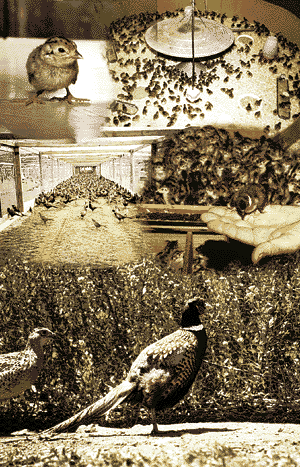
The New Jersey Division of Fish, Game and Wildlife completed acquisition of a 492 acre farm in 1925 just south of Hackettstown, two years after the first release of Rockport pheasants. Soon after the operation began, equipment arrived for incubating and hatching the chicks that remains in use today. Today, a staff of six shuttle 50,000 ring-necked pheasants out the door each year for the sporting public. They collect and turn eggs, tray new chicks, herd adolescents outdoors and back, clean broodhouses and acres of outdoor pens, spread 3 tons of feed a day, debeak, clip wings, and crate and truck the birds to Wildlife Management Areas all over New Jersey.
 Early
each year, 270 cock pheasants mingle in breeder yards with 2700 hens,
resulting the laying of 130,000 - 140,000 eggs between the Ides of March
and Independence Day. Out of this pool come the final candidates for
six or seven annual rounds of hatching. Collected eggs are moved inside
where they are disinfected, sorted and put in trays. Temperature maintained
at 55 degrees keeps the eggs dormant until they enter the incubators.
Specially designed racks allow technicians to tilt thousands of eggs
every four hours to keep the contents from settling to one side. When
enough eggs have accumulated for a hatch, incubation begins in a forced
air circulator which also automatically roll the eggs five times daily.
The final 7 days of the 24 day cycle are spent in flat hatchers.
Early
each year, 270 cock pheasants mingle in breeder yards with 2700 hens,
resulting the laying of 130,000 - 140,000 eggs between the Ides of March
and Independence Day. Out of this pool come the final candidates for
six or seven annual rounds of hatching. Collected eggs are moved inside
where they are disinfected, sorted and put in trays. Temperature maintained
at 55 degrees keeps the eggs dormant until they enter the incubators.
Specially designed racks allow technicians to tilt thousands of eggs
every four hours to keep the contents from settling to one side. When
enough eggs have accumulated for a hatch, incubation begins in a forced
air circulator which also automatically roll the eggs five times daily.
The final 7 days of the 24 day cycle are spent in flat hatchers.
After hatching, chicks spend ten weeks in temperature controlled brooder rooms. Each room, about 40 x 20, accommodates nearly 1200 birds, and allows gradual access to outdoor runs by a series of gates. Over 30 acres of range pens house the pheasants until fall. The pens are planted in Sorghum to provide the birds with protection from the weather. In the pens the male pheasants will grow to 2 1/2 - 3 pounds, females about 1 1/2 pounds. Beginning in early November, the pheasants are run into a large building, crated and loaded onto trucks for distribution. The birds will be stocked for "put and take" on approximately 100,000 acres of state Wildlife Management Areas.
After its release, a Rockport pheasant faces grim prospects for seeing the new year. Flushed from cover by a Pointer or Spaniel, nine out of ten will end up in the sights of a hunter's gun. But, without the hunting program the Ringneck Pheasant, familiar sight in depictions of eastern wildlife, would be long gone from the local countryside. Imported to New Jersey from the Orient in 1790, the species eventually found its way to all but a few of the United States. But pheasants, which require the cover of hedgerows, groves, or crops, don't do well in suburban neighborhoods. Their sensitivity to pesticides has made our modern landscape even more hostile. The Ringneck's has nothing to do with hunters; rather the program has helped them survive. Wily and elusive,-- they can run as fast as some birds can fly-- Ringnecks remain a challenge for the hunter. And they remain an important in the natural food cycle. Foxes, racoons, skunks, and raptors like the taste of pheasant too.
Nine out of ten New Jersey pheasants now hail from Rockport; one in ten makes it to another year. But Rockport pheasants generate an estimated $2.6 million in income to local businesses such as gas stations, motels, diners, taxidermists and sporting goods stores. The cost of raising pheasants is borne completely by the hunters who purchase Pheasant/Quail Stamps: no state tax dollars are used. And the farm is a real nice place to visit, even if you're a hunter.
The Rockport Pheasant Farm, located on Rockport Rd. (Rt. 629) roughly 3.5 miles south of Main St. (Rt. 46), Hackettstown, is open daily from 7:30am to dusk. The farm is also home to exotic pheasants, turkeys and white-tailed deer, ducks and geese. Picnicking is allowed but there are no food or toilet facilities available. A scenic hiking loop around the breeder yards offers striking views of the farm and surrounding area.
Local roots!
The Centenary Stage Company produces professional equity theatre and also a wide variety of top-flight musical and dance events throughout the year.
Consider Rutherfurd Hall as refuge and sanctuary in similar ways now, as it served a distinguished family a hundred years ago.
Millbrook Village, part of the Delaware Water Gap National Recreation Area, is a re-created community of the 1800s where aspects of pioneer life are exhibited and occasionally demonstrated by skilled and dedicated docents throughout the village
The 8,461 acre park includes the 2500-acre Deer Lake Park, Waterloo Village, mountain bike and horseback trails.