My undergraduate Field Biology professor at SUNY Plattsburgh, whom I credit with my becoming a professional environmentalist, had been a counselor at Life Magazine’s National Camp for Professional Leadership in the 1940s. The camp was located on Mashipacong Pond, only five miles from the New Jersey School of Conservation’s future site. It was in a book that he loaned me that I saw pictures of the horse drawn covered wagons that were used to haul campers and supplies around the back roads to campsites throughout Sussex County. You can imagine my surprise when I saw remnants of these wagons on my first visit to NJSOC some thirty-five years ago. I’ve been back several times since for various seminars and conferences; most recently this spring for another look around.
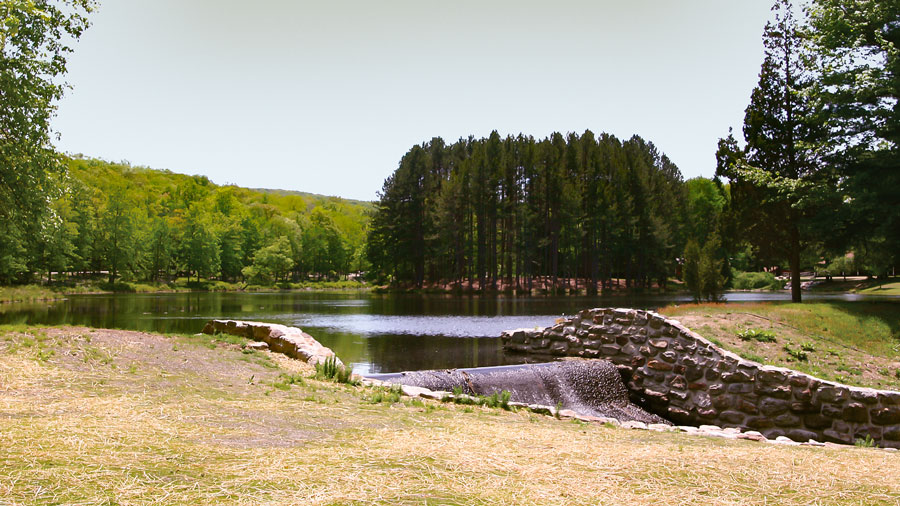
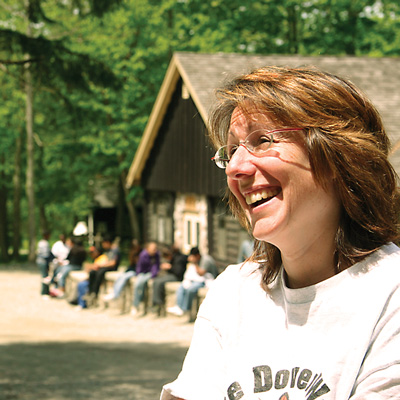
"Respect, responsibility and resourcefulness”, according to Dawn Sperry, are the three Rs that are instilled into each and every student attending the New Jersey School of Conservation. For many years, Dawn coordinated trips for seventh graders from Dover Middle School who come every year to SOC, as it is referred to by students and teachers alike. Prior to her supervisory role at NJSOC, Dawn had attended as a student.
Each academic year the NJSOC provides environmental education programs for nearly 7,000 elementary and secondary school students; and nearly 1,000 teachers from 100 schools in 21 counties in New Jersey. Many of the teachers return each year. Although some districts have stopped their participation due to budgetary restraints, others still send students whose grandparents attended 40 or more years ago.
In 1981, Governor Brendan Byrne signed legislation designating that the New Jersey School of Conservation shall be used in perpetuity as a school for environmental field study under the direction of the Board of Trustees of Montclair State College. The 1981 law earmarked state funds to annually be granted to Montclair State College expressly to support the operations of NJSOC … in perpetuity. (N.J.S.A. 18A:64I-1). On September 1, 2020, Montclair State closed the School of Conservation and returned management responsibilities for the facility to its owner, the New Jersey Department of Environmental Protection.
Located on a 240-acre tract within the boundaries of Stokes State Forest in Sussex County, the educational component is actually geared to training educators and teachers who realize the benefits of using the outdoors as a classroom. The SOC staff teaches the teachers that accompany each group of students; then monitor the teachers as they go about conducting the exercises associated with each unit. All of the lesson plans for each teaching unit are on the NJSOC web site to encourage teachers to prepare ahead of their trip. Educators can actually gain Professional Development Units required by the State of New Jersey by using this program.
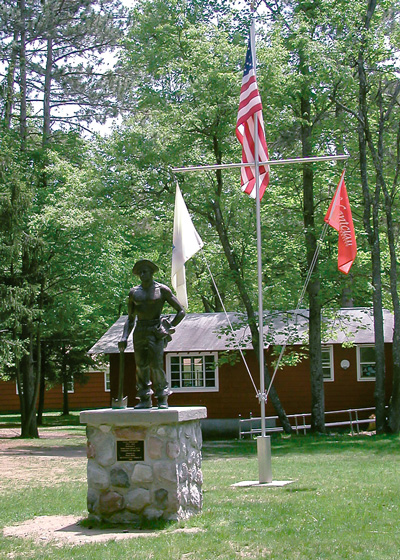
The original buildings were part of the Skellinger Family properties that eventually became headquarters for the Civilian Conservation Corp (CCC) responsible for constructing cabins, privies, roads, bridges and impoundments for holding water to fight forest fires. As you drive through the forest today, you cannot help but take notice of their artesian handiworks, especially the fine stonework on the bridges crossing the Flatbrook and its tributaries. A commemorative statue of a CCC Enrollee dedicated in 1996 greets visitors arriving on the SOC grounds. The CCC was part of Roosevelt’s New Deal in 1933 by which millions of out-of-work young men were employed on public projects to repair and enhance our nation’s natural resources.
The New Jersey School of Conservation officially opened on Memorial Day in 1949 with Dr. E. De Alton Partridge as its first Director. Partridge believed that outdoor education could serve as a critical approach to help teachers with subjects in which they lacked first hand experience or knowledge; like weather, natural history and geology. Dr. Partridge had cultivated his skills in outdoors education at the Mashipacong Pond Life Camp where my college professor counciled. Dr. John Kirk then served a long tenure as Director until his retirement in 1999, when Dr. William (Bill) Thomas, an anthropologist from Arizona State University, took over the reins. His ongoing ethno-ecological research in the conservation and traditional ecological wisdom of indigenous people in Papua New Guinea lends unique perspective for his work here in New Jersey.
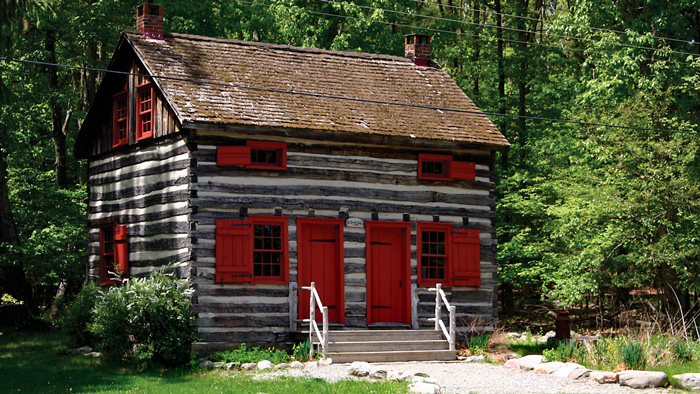
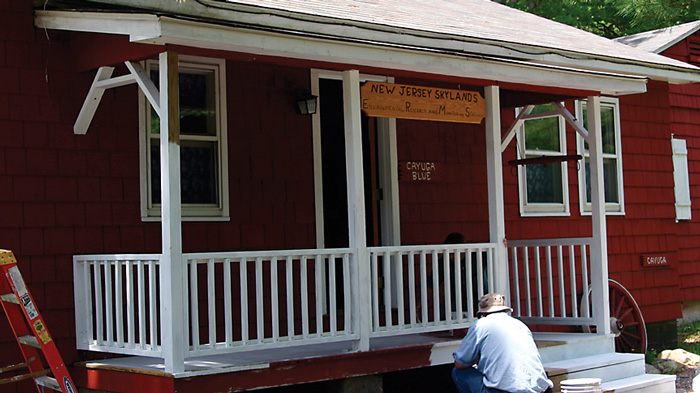
As you would expect, much of the overall education program at NJSOC is oriented to natural history, outdoor activities and learning situations ranging from astronomy, beaver ecology, and bird watching to wetland ecology. Equally important are the social science and the humanities components, with sessions on Art in Nature, Creative Writing and Sensory Awareness in a Natural Setting. In the past, summer programs at NJSOC have included a Student Music Camp with noted musicians conducting workshops on jazz and other musical genre.
Some of the students from Dover during my most recent visit to NJSOC told me that one of their favorite sessions is the Action Socialization Experience where small groups of students cooperatively decide on a solution to a carefully designed problem and then carry out their plan of action as quickly and efficiently as possible. Students have approximately 15 minutes at each station. As a result, the students realize that through communication and cooperation they are able to solve numerous challenges. Visiting teachers and adults are the facilitators for the actual activities but intervene only when the group needs refocusing. The students are assigned randomly, most of the time they do not know each other well and certainly have not worked together to solve a common problem before. The students incorporate this experience in team building back in the classroom in their regular school curriculum.
NJSOC has not been without its fiscal crises as SOC is funded in part by a separate line item in the state’s budget which comes under scrutiny each year. In October 2022, Governor Phil Murphy signed unanimous bipartisan legislation designating the Friends of the NJSOC managers of the historic CCC campus. This year also saw the return of our first school groups for day programming, expanded staffing with trained volunteers and new hires, and the beginning of restoration work on the school’s historic facilities. In May of 2023, the Friends signed a 20-year lease with the State of New Jersey making them responsible for the operations and maintenance of the NJSOC campus. This enormous victory put the NJSOC back on the path to fulfilling its original mandate, which is providing a space for New Jersey students, educators and researchers to learn about themselves and the environment through discovery and investigation. Still, as aged buildings deteriorate and need repair and as operating costs go up; "Each year is a struggle and a challenge” according to Dr. Thomas.
NJSOC is a very special place with solitude and serenity completely devoid of the noises and distractions of the outside world.
The Friends of NJ School of Conservation are campaigning hard to gather support and find ways to keep this fantastic learning center open. Learn More!
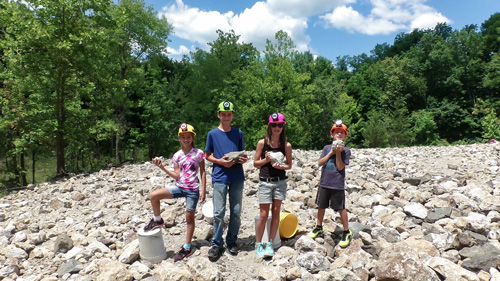
“The Fluorescent Mineral Capitol of the World" Fluorescent, local & worldwide minerals, fossils, artifacts, two-level mine replica.
Follow the tiny but mighty Wallkill River on its 88.3-mile journey north through eastern Sussex County into New York State.
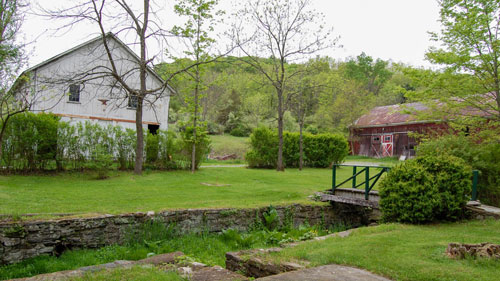
Peters Valley shares the experience of the American Craft Movement with interactive learning through a series of workshops. A shop and gallery showcases the contemporary craft of residents and other talented artists at the Crafts Center... ceramics, glass, jewelry, wood and more in a beautiful natural setting. Open year round.
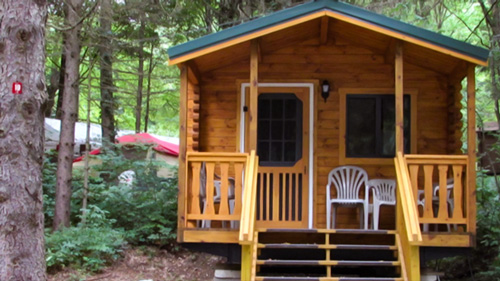
Located in Sussex County near the Kittatinny Mountains the camping resort offers park model, cabin and luxury tent rentals as well as trailer or tent campsites with water, electric and cable TV hookups on 200 scenic acres.